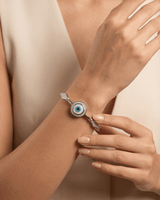


A silver Rakhi is one of those gifts that looks simple until you begin shopping for it. Then the questions start.
Is “925” real silver? Is pure silver better? Why does one Rakhi cost a few hundred rupees while another, with an almost identical photograph, costs much more? And what exactly is silver-plated?
These are sensible questions. Product titles often use the words silver, pure silver and silver finish as though they mean the same thing. They do not. Here is the explanation we give customers in the store—without the technical language.
First, what does 925 silver mean?
925 sterling silver is real silver. It contains 92.5% silver and a small amount of another metal, usually added to give the piece strength.
That last part matters. Silver in a very high purity is naturally soft. A Rakhi charm needs to hold its shape, keep its detailing and survive handling, tying and storage. Sterling silver offers a useful balance: it keeps the look and value of silver but is practical enough for jewellery.
You may find a small “925” mark on the back or edge of a piece, although its position and visibility depend on the size and construction of the motif. Do not judge purity from colour alone. Freshly polished plating can look just as bright in a photograph.
Pure silver and 925 silver are not rivals
People sometimes assume that if 925 silver is good, then the highest possible purity must always be better. Jewellery is not quite that simple.
Higher-purity silver contains more silver, but it is also softer. Sterling silver contains 92.5% silver and is generally better suited to shapes and details that need some strength. The right choice depends on how the Rakhi is made, how heavy the motif is and whether it is intended to be worn again.
So, “pure silver” is not automatically a better purchase, and “925” does not mean fake or low-grade. The seller should state the fineness clearly instead of leaving you to guess.
Then what is silver-plated?
This is the easiest difference to understand.
A silver-plated Rakhi is made from another metal and given a thin silver-coloured or silver layer on top. It can be attractive and perfectly suitable for a one-day festival piece, but it is not solid 925 silver. With wear, moisture or rubbing, the surface layer may eventually fade.
There is nothing wrong with buying a plated Rakhi if that is what you want. The problem is paying a sterling-silver price for a plated product because the description was vague.
In short: 925 silver is silver throughout the declared silver component; silver-plated means the silver is mainly on the surface.
Why two 925 silver Rakhis can have different prices
Silver purity is only one part of the price. Weight has an obvious effect, but the less obvious cost is often in the making.
A flat Om cut-out and a sculpted Ganesh face may both be 925 silver, yet the second design can require more metal, more finishing and more time. Enamel, stones, beads, carving and hand-polishing also change the price. Packaging and the type of thread make a difference too.
This is why we would not recommend comparing Rakhis only by the size they appear on a phone screen. Look for actual dimensions, weight when provided, close-up images and a clear material description. An honest product page should help you understand what you are buying.
A few checks we actually use
When a silver piece is in hand, we look at the finishing before anything else. The back should be reasonably smooth. The loops holding the Rakhi thread should feel secure and balanced. Fine lines in a deity motif should be clear rather than muddy, and stones or beads should not be hiding rough work.
Online, you cannot touch the product, so replace that physical inspection with a careful reading:
- Does the page clearly say 925 sterling silver, a different fineness, or silver-plated?
- Are there close-up photographs rather than only one heavily edited image?
- Can you see the back or thread attachment?
- Are size, care and delivery details easy to find?
- Is there a real business address or a clear way to contact the seller?
If the page only says “silver Rakhi” and avoids every other detail, ask before ordering.
Choosing the design is the enjoyable part
Once the material is clear, forget purity numbers for a moment and think about your brother.
Ganesh and Om motifs remain popular because they are familiar and easy to gift. Khanda and Ek Onkar designs make the choice more personal for Sikh brothers. Hanuman, Shiva and Trishul Rakhis have a bolder devotional character. Brothers who do not normally wear traditional jewellery often prefer a small charm or bracelet-style cord.
Thread colour changes the mood more than most people expect. Red feels classic; saffron is bright and traditional; maroon looks quieter; deep green gives silver a lovely contrast. Beads add interest, but a plain thread is often more comfortable for someone who rarely wears anything on his wrist.
For more practical design ideas, read our guide to choosing a Silver Rakhi by your brother’s personality.
Order with the date in mind
Raksha Bandhan 2026 falls on Friday, 28 August. Popular motifs tend to disappear first, and courier pressure builds closer to the festival. If the Rakhi is going to another city, order with a sensible buffer rather than relying on the final few days.
You can browse the current designs and live prices in the Hardik Jewels Silver Rakhi collection. Stock and prices may change as the festival approaches.
What happens to silver after Raksha Bandhan?
Real silver can become slightly dark over time. This is normal tarnish, caused by air, moisture, sweat and products such as perfume. It is not, by itself, a sign that the silver is fake.
After the festival, wipe the charm gently with a soft dry cloth and keep it in a separate airtight pouch. Do not scrub enamel, stones, pearls or oxidised details with abrasive powder. A silver polishing cloth is usually enough for a plain sterling-silver surface.
We have a separate silver jewellery care guide if you want to store the Rakhi as a keepsake.
Three quick answers
Is 925 silver genuine silver?
Yes. Sterling silver contains 92.5% silver and is widely used for jewellery because it is stronger than very soft fine silver.
Is silver-plated Rakhi fake?
Not if it is honestly described. It is simply a different product: another metal with a silver layer or silver-coloured finish, rather than solid sterling silver.
Which one should I buy?
Choose 925 silver when you want a genuine silver keepsake. Choose plated when you mainly want an attractive festive Rakhi at a lower budget. In both cases, the description and price should match the material.
The best purchase is not the one with the grandest purity claim. It is the one where the seller tells you clearly what the Rakhi is made from—and the design feels right for your brother.